
Your planning checklist
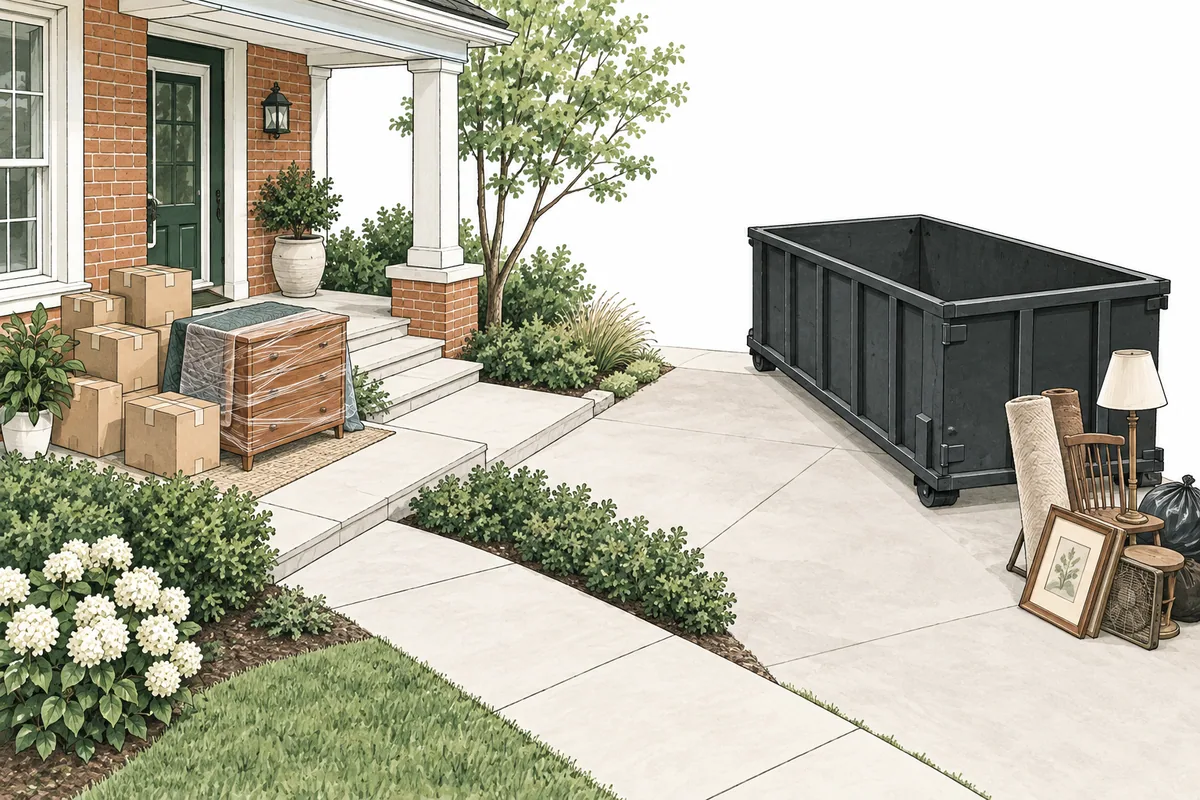
A keepsake-first cleanout sequence
- Agree
Name the removal decision-maker.
- Protect
Secure documents and keepsakes.
- Separate
Give keep, hold, reuse and remove distinct places.
- Review
Confirm the list before loading starts.
Set a decision process before anything leaves
A whole-home clearout can involve relatives, an executor, a property owner and people who cannot attend in person. Identify the person authorised to approve removal and agree how uncertain items will be handled. The removal team should not have to decide which family belongings are unwanted. This is a practical organisation step, not legal advice about an estate or ownership rights.
Create a hold area for undecided belongings and make it visibly different from the disposal area. Photograph items that need discussion. If the home must be handed over by a particular date, share that deadline when asking about availability, without assuming a slot is already reserved.
Do a keepsake and document pass first
Before moving large furniture, check drawers, cupboards, coat pockets, books and storage boxes for documents, jewellery, photographs and small personal objects. Put retained records and valuables in a secure place away from the work. Do not rely on remembering which unmarked box is important once several rooms have been sorted.
- Keep: confirmed belongings with a named destination.
- Hold: items that need another person to decide.
- Reuse: items a recipient or organisation has agreed to accept.
- Remove: contents approved for the agreed disposal service.
Give each category a physical location. A label on a crowded pile is less reliable than a clearly separated area.
Plan phases around decisions, not just rooms
Start with settled items so sorting can move forward without forcing decisions about sentimental possessions. A room-by-room list is useful, but identify the action for each group: family collection, reuse, specialist handling or approved disposal. Arrange reuse collections separately and verify that the recipient can take the items. Do not assume Bin and Gone supplies valuation, resale, donation placement or document-destruction services.
Check secondary spaces such as a garage, basement or shed before sizing the disposal job. If an outbuilding or long driveway is involved, mention the actual surface, gates and carrying distance. These property details are more useful than a general description of a large Newcastle home.
Match the service to the family’s available time
A customer-loaded disposal bin can support staged sorting when someone can safely load the approved contents. Plan who will do that work and when. Confirm the rental period and discuss any longer placement before booking; do not assume additional days or multiple collections are included.
Crew-loaded cleanout help is separately quoted and may suit agreed furniture or contents that need carrying. Share photographs, floor locations, stairs and the removal list. For a small remainder, Durham offers Clarington furniture and large-item collection by appointment for up to two accepted items. Check current eligibility if that meets the need, remembering that curbside collection does not empty a home.
Use a final walk-through to prevent avoidable mistakes
Before the removal begins, review the marked items with the person overseeing the job. Confirm that the hold and keep areas are excluded. Check that a loading route remains available and that another moving vehicle will not block the bin. The placement checklist helps organise access, while the pricing page explains the customer-loaded package separately from crew estimates.
After the agreed contents are removed, check wardrobes, storage cupboards, the garage and outbuildings against the original list. Keep any documentation your family needs. A disposal booking is not the same as a full property handover, deep clean or legal estate service, so arrange those other tasks independently where required.
Questions about household projects
Can I book a bin while the family is still sorting?
Yes, provided the placement, materials, timing and suitable bin can be agreed. First decide which contents are approved for disposal and who will load them safely. Leave uncertain belongings in a separate hold area. A rental should support the sorting plan rather than pressure the family into rushed decisions.
Does an estate cleanout include taking everything in the house?
The scope needs agreement. Give the team a clear removal list and identify belongings that must stay. Whole-home contents, selected furniture and garage leftovers are different jobs. Crew labour is separately quoted, and valuation, legal administration, resale and other specialist estate tasks are not implied by a disposal booking.
Can the clearout be completed before a property closing?
Explain the closing or handover date when requesting an estimate so the team can review scheduling and scope. Build in time for family collections, sorting and any other trades. Availability is confirmed during the booking discussion; a prepared website request does not reserve a truck or guarantee a completion date.
Need lifting help? Compare crew-loaded removal ↗
The website prepares a text draft, not a confirmed booking. Materials, access, suitable bin, final price and dates are agreed directly.
Sources and local checks
Local guidance checked October 9, 2026. Municipal collection rules and Bin and Gone's material agreement are separate. Recheck current rules before planning disposal.