
Your planning checklist
A cleaner renovation starts with a waste plan
- List
Name the materials before demolition starts.
- Review
Confirm acceptance, bin and loading limits.
- Place
Agree access and private-property placement.
- Schedule
Match delivery and pickup to the work.
Book for the material coming out, not just the room size
A renovation waste bin in Newcastle is easier to plan when the waste list is specific. A kitchen project might produce cabinets, countertop pieces, packaging and flooring. A roof job might be mostly shingles. Those piles differ in weight, shape and handling even if they seem to take up a similar amount of space.
List each material and approximate quantity before demolition starts. Say whether the job is a single room or several phases, and whether household clutter will be mixed in. Send photos where useful. Bin and Gone can review the proposed load, recommend a suitable option and explain any restrictions before a container arrives.
For Newcastle households, Durham lists renovation debris such as cabinetry, lumber and drywall as unacceptable in regular curbside garbage. Do not plan a renovation around ordinary garbage pickup. Confirm an appropriate disposal route for each material.
Separate approved debris from items needing another route
Drywall, flooring, wood and shingles should be identified individually when requesting a construction debris bin. Acceptance for the particular load must be confirmed. Keep unknown substances and special waste separate rather than assuming everything from a renovation belongs together.
- Flag tile, plaster, shingles and other dense material for weight review.
- Do not assume concrete, soil or masonry is accepted in a general mixed-waste rental.
- Keep chemicals and hazardous materials out of the bin.
- Stop before disturbing material you suspect may contain asbestos and seek appropriate assessment.
Check what can go in the bin and ask about the exact material mix. Durham's facility guidance distinguishes waste streams and acceptance rules. It is not proof that Bin and Gone accepts a material or that one facility can take every type of debris.
Plan the weight separately from the yard size
A roll-off dumpster may have room left while already approaching the loading limit agreed for the material. This is especially important with dense debris. Do not use the top edge of the bin as a universal permission to keep loading.
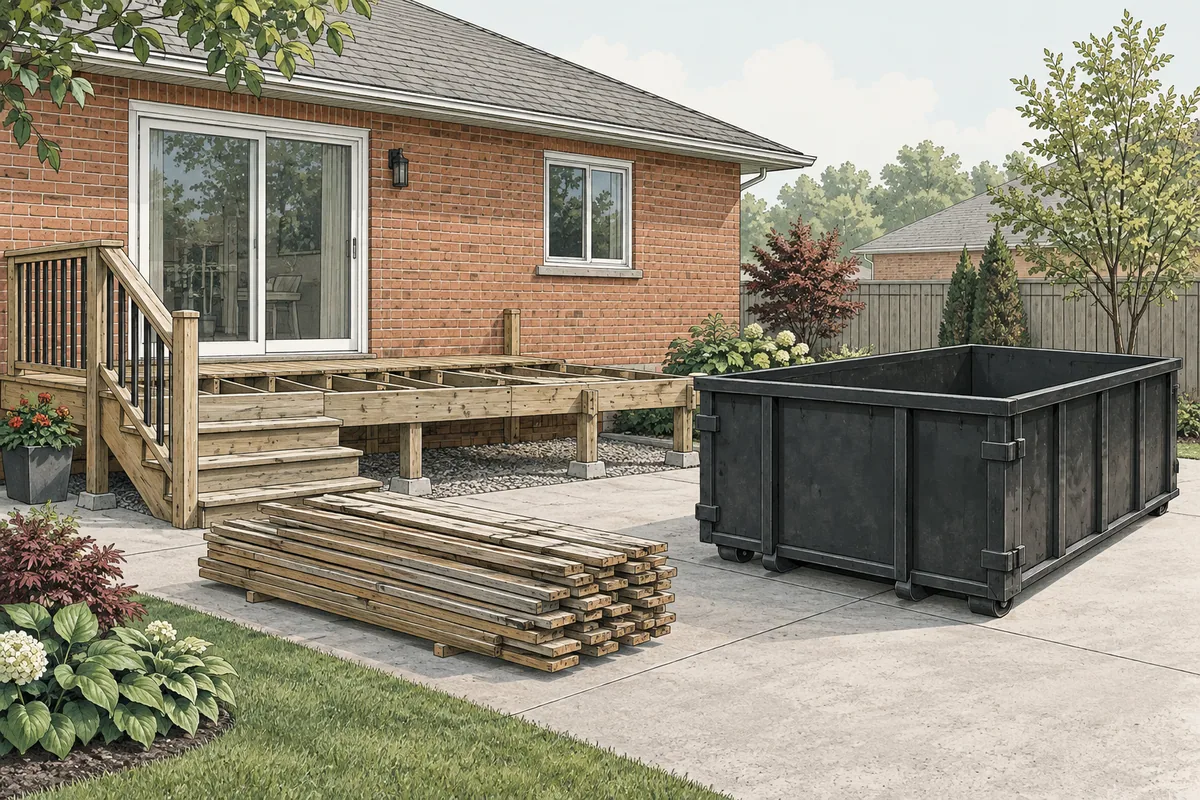
Compare the available bins, including the separate 20-yard option where appropriate, but ask which one suits the waste. The illustration of a larger bin is not an exact dimension drawing or a promise that a complete roof will fit safely. Explain the material quantity so the team can discuss the loading plan instead of relying on a pickup-load comparison.
Make the seven-day period match the work sequence
Delivery too early can use up time while you are still waiting for other work; delivery too late can leave demolition debris in the way. Coordinate the preferred drop-off with the point when approved waste starts being generated, while allowing time to confirm availability.
The published customer-loaded package is $563.87 CAD including HST for the 1 ton minimum, seven days, delivery, pickup and fuel. Each additional ton is $226 including HST. Confirm the selected bin's project price and ask what happens if the schedule changes. Do not assume an extension, exchange or extra-day charge that has not been agreed.
If the project has several demolition stages, explain that from the outset. A second load or revised pickup is something to plan with the team, not an automatic inclusion.
Protect working access at your Newcastle property
Choose a private placement that leaves a route for people, materials and the delivery truck. At a tight residential entrance, plan where cars will park. On a longer rural approach, show gates, turns and the surface conditions. Keep the agreed access clear for collection as well as delivery.
Check the Newcastle placement guide before choosing a loading location. Confirm access with the team.
Before booking, provide the Newcastle address, work type, materials, quantity, requested dates and placement photos. If you cannot safely carry debris to the container, discuss crew-loaded removal separately. A bin rental supplies disposal space; it does not automatically include demolition or labour.
Questions about renovation planning
Can I put shingles and tile in a renovation bin?
Identify them before booking so the team can review the material, quantity, suitable bin and loading limit. Heavy debris may reach an agreed weight limit before the container looks full. Do not assume that a large bin can be filled to the top with every dense material.
Does renting a bin include removing my kitchen or deck?
No. Customer-loaded bin rental means you place approved waste into the supplied bin. Demolition, dismantling and crew loading are not automatic inclusions. If you need help with part of the work, describe it separately and confirm the available scope and estimate before scheduling anything.
Should I book a 20-yard bin for a renovation?
Possibly, but choose it after discussing the material and amount rather than the room name alone. Confirm availability, exact dimensions, delivery clearance, loading limits and the applicable project price. A smaller suitable load can be safer than treating spare volume as permission to add more heavy debris.
The website prepares a text draft, not a confirmed booking. Materials, access, suitable bin, final price and dates are agreed directly.
Sources and local checks
- Municipality of Clarington: occupying our roadway
- Region of Durham: waste management facilities
- Region of Durham: garbage and unacceptable materials
Local guidance checked October 9, 2026. Municipal collection rules and Bin and Gone's material agreement are separate. Recheck current rules before planning disposal.